The Kluge-Ruhe Aboriginal Art Collection of the University of Virginia will undertake a major project to preserve bark paintings in the collection. The project, which involves cleaning and re-housing approximately 530 bark paintings, was supported by University of Virginia President John T. Casteen III through the allocation of University discretionary funds.
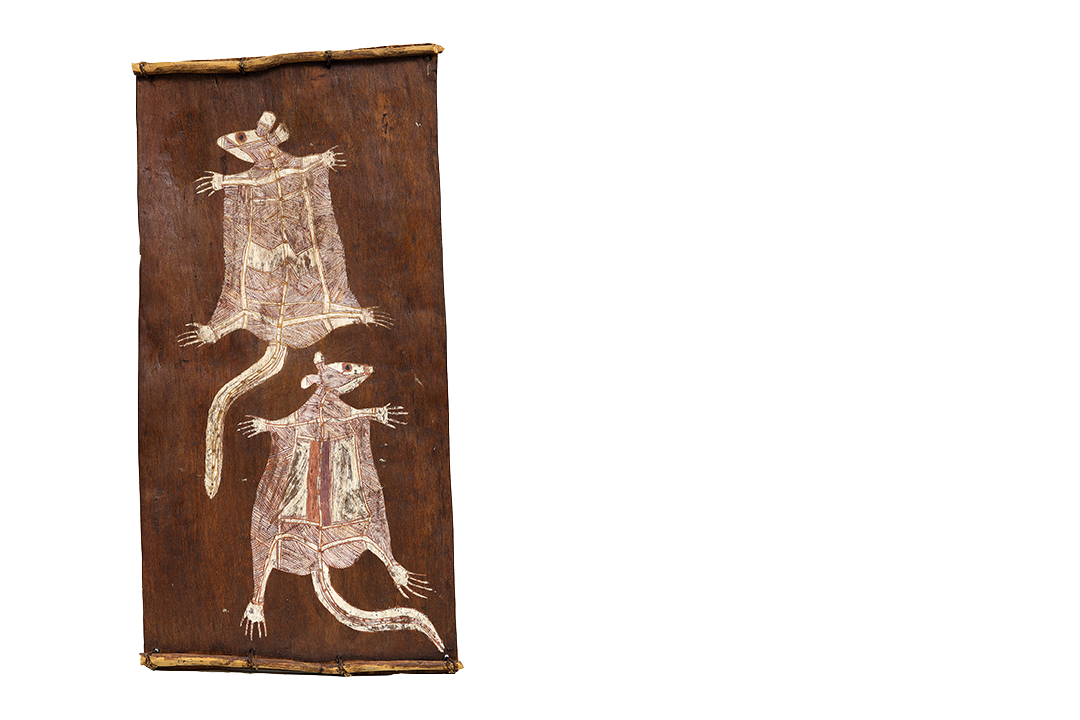
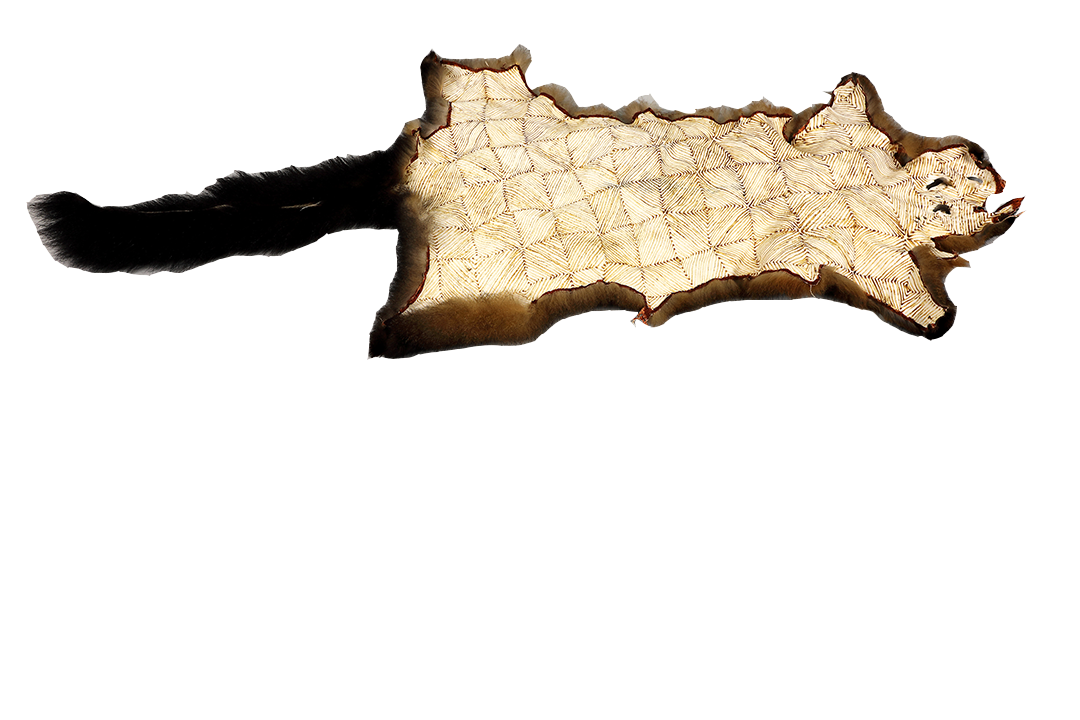
The Kluge-Ruhe Collection is considered to be the most important collection of Australian Aboriginal art outside Australia. One third of the Kluge-Ruhe collection consists of bark paintings from northern Australia. Dating from the early 1940s to 2007, bark paintings in the Kluge-Ruhe Collection are historically and culturally significant. Demonstrating regional stylistic and thematic differences, bark paintings typically illustrate ancestral stories associated with the creation era know as The Dreaming. They are closely tied to art traditions such as rock art, body paint and ground sculpture.
Bark paintings are constructed from organic materials that are naturally unstable. The substrate consists of a sheet of bark from the Eucalyptus tetradonta (stringybark) tree. The paints are derived from pigments such as red and yellow ochres, pipe clay and charcoal mixed with natural and synthetic paint binders. During this project, Kluge-Ruhe staff will carefully examine and document each painting. Paintings will be surface cleaned if needed and re-housed in stackable storage customized for each work. The trays will enable staff to move, store and access bark paintings without handling them. This project will preserve the art, improve the appearance of the paintings, and make them more accessible to Kluge-Ruhe staff and researchers.
The National Indigenous Art Triennial: Culture Warriors opened at the Katzen Art Center at American University on September 8 and runs through December 6. On loan from the National Gallery of Australia (NGA), the exhibit includes the work of 30 Indigenous artists representing every Australian state and territory. All of the works were created since 2004 in a variety of media, including painting on bark and canvas, sculpture, textiles, weaving, photography, video and printmaking. This inaugural exhibition was curated by Brenda Croft, former Senior Curator of Aboriginal and Torres Strait Islander Art at the NGA. The opening festivities were attended by Croft and eight of the artists included in the exhibition: Jean Baptiste Apuatimi, Daniel Boyd, Gordon Hookey, Ricky Maynard, Arthur Koo’ekka Pambegan Jr, Christopher Pease, Christian Bumbarra Thompson and Judy Watson. Australia’s Minister for the Evironment, Heritage and the Arts Peter Garrett, was also present at the opening.
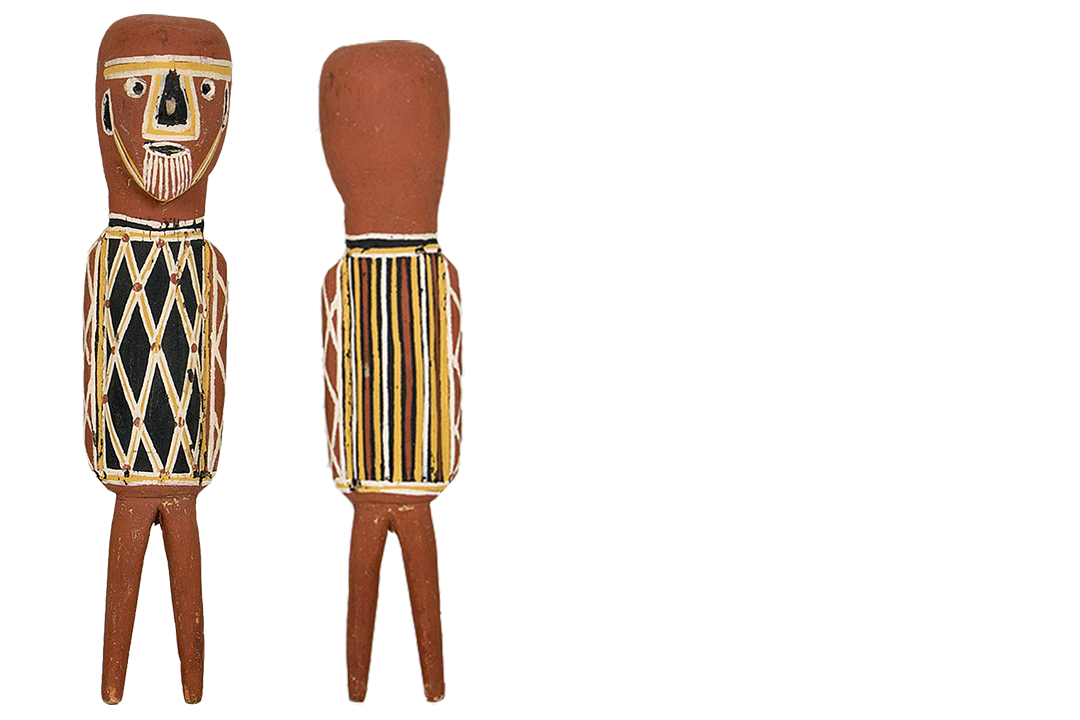
On Friday, September 11 the artists visited the Kluge-Ruhe Collection and UVA Art Museum to see works on exhibit and in storage. One of the highlights of the visit was Jean Baptiste Apuatimi’s identification of Tiwi objects in the Kluge-Ruhe Collection. After lunch, the group met students who are studying Australian Aboriginal art at the UVA Art Museum to see the bark paintings and large canvas from Kluge-Ruhe currently installed there. They walked over to the lawn for a brief orientation on Jefferson’s Academical Village before returning to Washington DC.
The Katzen Art Center is open Tuesday through Sunday, 11:00 am to 4:00 pm. Admission is free and there is on site parking. Click here for more information.
A new exhibit, What Will Last Beyond Today: John W. Kluge’s Collection of Australian Aboriginal Art, opens Saturday, August 22 and runs through December 20 at the Kluge-Ruhe Collection. The opening reception will be held Friday, August 28, from 5:30 – 7:30 pm.
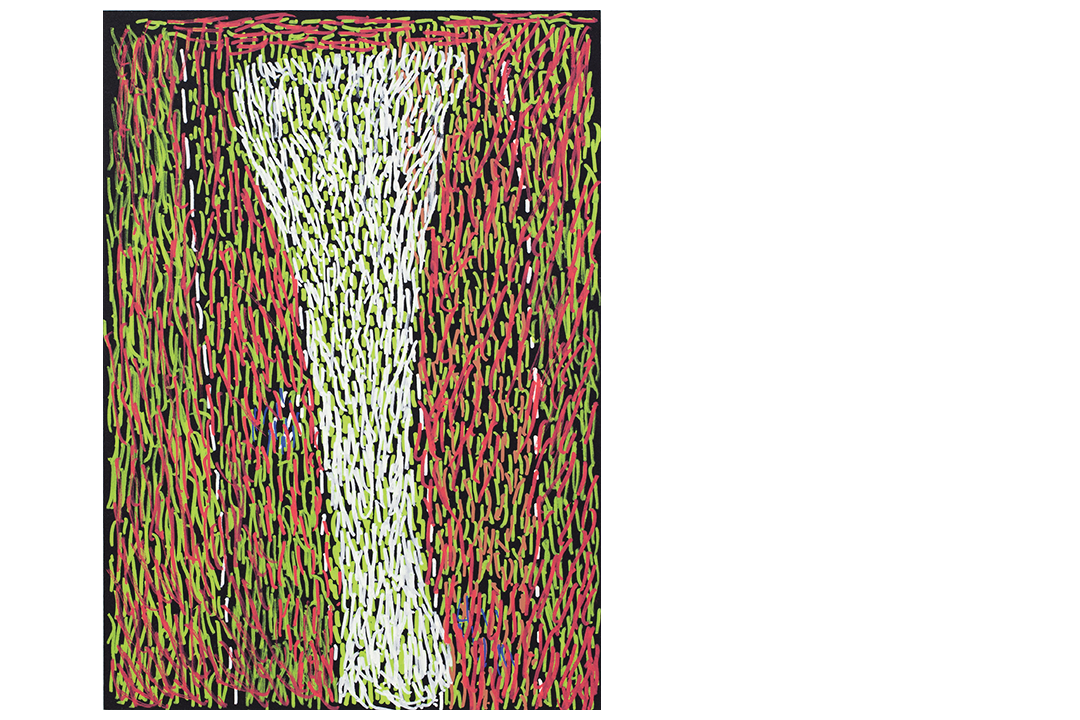
John Kluge began collecting Aboriginal art in 1988 inspired by the Dreamings exhibition at the Asia Society Galleries in New York. As a collector, Kluge preferred to focus on artists who were not highly visible, either early-career artists or those working in less recognized genres. When he first saw Aboriginal art it was not well known internationally. Through several notable commissions from community art centers like Bula’bula Arts in Ramingining and Injalak Arts and Crafts in Oenpelli, Kluge raised awareness and appreciation of Aboriginal art. Today, Australian Aboriginal art is represented in major museums around the world and has achieved recognition as fine contemporary art.
The exhibit follows Kluge’s collecting history, including the acquisition of the Ruhe Collection from the estate of University of Kansas professor Ed Ruhe in 1993. As a collector, Kluge sought out a broad range of styles of Aboriginal art – both traditional forms and artistic innovations. John Kluge established the Kluge-Ruhe Collection at the University of Virginia in 1997. He and his wife, Tussi, gave an additional 16 early western desert paintings to U.Va. in 2008.
The exhibit features a film, produced by Tussi Kluge, which depicts Kluge’s formative years and business success as the founder of Metromedia Corporation, his interest in Aboriginal art and his legacy of philanthropy.