
Psychology: People

 
Other Faculty
prev
Schulman, Arthur I.
next
Teachman, Bethany A.

Personal Information

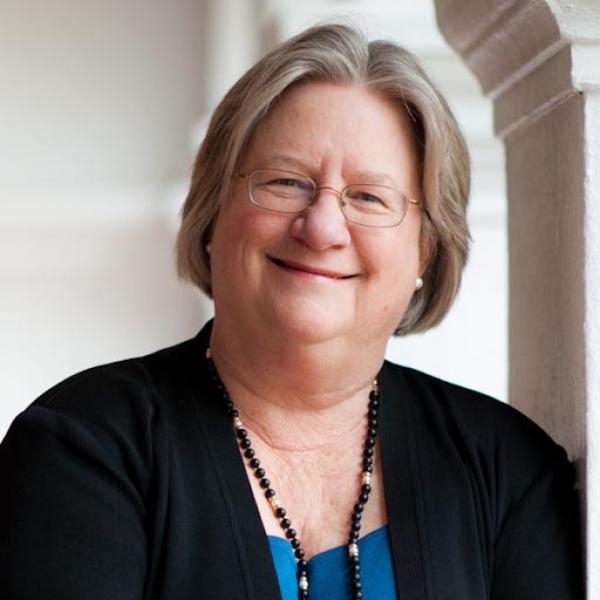
Spellman, Barbara A.  
Professor
E-mail: spellman@virginia.edu Homepage
Room: B008/B046-B056 Phone: 982-5591/243-8187
Instructor Number: 7605
Areas: Cognitive, Social 


Office Hours

Day Time
Monday  
Tuesday 2:00PM-4:00PM
Wednesday 2:00PM-3:00PM
Thursday  
Friday  


Research Interests

My research interests have always centered on a question I first asked myself when I was about 12 years old: Why is it that humans, who have the capacity to reason so well, often reason so poorly? Good reasoning depends on many things including: (1) acquiring useful information, (2) accessing the information, (3) adapting what you know to novel situations, and (4) understanding the causes of events. Thus, my research spans topics in both thinking and memory and in both cognitive and social psychology.

Continuing research in my lab examines:
* Hypothesis testing: how do people gather information to create hypotheses about the world and how do they test those hypotheses?
* Causal Reasoning: how do we figure out the causes of events (both in science and law) in this complex world?
* Counterfactual Reasoning: how does reasoning about "what might have been" affect our reasoning about what really is?

Recently, I have become more interested in applying this research to issues in the legal system. New research in my lab examines:

* Psychology & Law projects:
- Causal and counterfactual reasoning in the law: How do jurors make decisions about what caused what (and so who ends up paying or going to jail)?
- Corroboration (what counts as corroborating evidence)
- Evidence weighting: How do people make decisions when some information might be deceptive or incomplete?
- Witness calibration: How do we evaluate the likely accuracy of witnesses' statements?


For other (probably old) information see my web page.


Selected Publications

  • Spellman, B. A. (2007). On the supposed expertise of judges in evaluating evidence. University of Pennsylvania Law Review PENNumbra, 157(1), 1; http://www.pennumbra.com/issues/articles/155-1/Spellman.pdf

  • Tenney, E. R., MacCoun, R. J., Spellman, B. A., & Hastie, R. (2007). Calibration trumps confidence as the basis for witness credibility. Psychological Science, 18, 46-50. (Editor’s Choice for “Highlights of the Recent Literature” in Science, 315, 574, 2 Feb 2007.)

    Spellman, B. A., DeLoache, J., & Bjork, R. A. (2007). Making claims in papers and talks. In R. J. Sternberg, H. L. Roediger, & D. Halpern (Eds.), Critical thinking in psychology, (pp. 177-195). Cambridge University Press.

  • Robinson, P. H., & Spellman, B. A. (2005). Sentencing decisions: Matching the decisionmaker to the decision nature. Columbia Law Review, 105(4), 1124-1161.

  • Spellman, B. A. (2004). Reflections of a recovering lawyer: How becoming a cognitive psychologist -- and (in particular) studying analogical and causal reasoning -- changed my views about the field of psychology and law. Chicago-Kent Law Review, 79(3), 1187-1214.

  • Spellman, B. A., & Kincannon, A. (2001). The relation between counterfactual ("but for") and causal reasoning: Experimental findings and implications for jurors' decisions. Law and Contemporary Problems: Causation in Law and Science, 64(4), 241-264.

    Spellman, B. A. (1997). Crediting causality. Journal of Experimental Psychology: General, 126, 323-348.


This information was last updated on Tuesday, Sep-25-2007 04:41:07
This information has been displayed 6918 times since Tuesday, Sep-25-2007.
If you are Barbara A. Spellman and you want to update this information, click here.

Questions or comments about the department: psy-dept@virginia.edu
Maintained by: psychology webmaster
Last Modified: Sunday, 16-Jul-2006 15:56:42 EDT
This page has been visited 614953 times since Friday, 15-Jun-2007
© 2006 by the Rector and Visitors of the University of Virginia

Psychology Home Page